Parks & Trails Master Plan: Implementation

Share Parks & Trails Master Plan: Implementation on Facebook Share Parks & Trails Master Plan: Implementation on Twitter Share Parks & Trails Master Plan: Implementation on Linkedin Email Parks & Trails Master Plan: Implementation link

See how the Parks & Trails Master Plan is taking shape as the plan is put into action and enhancement to our parks and trails take shape.

Described as “where the rainforest meets the sea”, Sooke’s natural surroundings define its character. The Sooke Basin, Sooke Harbour and Sooke River are the defining geographic features, as are the Sooke Hills and surrounding mountainous areas, which provide recreation opportunities for residents and visitors. Sooke residents are passionate about the nature around them and their unique abilities to experience rainforest and ocean settings.

The purpose of the Parks and Trails Master Plan (PTMP)

See how the Parks & Trails Master Plan is taking shape as the plan is put into action and enhancement to our parks and trails take shape.

Described as “where the rainforest meets the sea”, Sooke’s natural surroundings define its character. The Sooke Basin, Sooke Harbour and Sooke River are the defining geographic features, as are the Sooke Hills and surrounding mountainous areas, which provide recreation opportunities for residents and visitors. Sooke residents are passionate about the nature around them and their unique abilities to experience rainforest and ocean settings.

The purpose of the Parks and Trails Master Plan (PTMP) is to guide the planning, land acquisition, capital development and operations of parks and trails in Sooke. It provides a vision for parks and trails, goals for achieving the vision, and a series of short, medium and long-term actions for acquiring and improving parks and trails in Sooke. The PTMP was prepared in conjunction with the District’s Transportation Master Plan (TMP), considering Sooke’s 2009 PTMP, and within the context of current strategic documents.

  • Explore Sooke’s Transportation, Parks and Trails Improvements Through New StoryMap

    Share Explore Sooke’s Transportation, Parks and Trails Improvements Through New StoryMap on Facebook Share Explore Sooke’s Transportation, Parks and Trails Improvements Through New StoryMap on Twitter Share Explore Sooke’s Transportation, Parks and Trails Improvements Through New StoryMap on Linkedin Email Explore Sooke’s Transportation, Parks and Trails Improvements Through New StoryMap link

    The District of Sooke invites residents to explore a new interactive StoryMap showing how the Transportation Master Plan and Parks and Trails Master Plan are being brought to life across the community.

    Through maps, photos and project information, the StoryMap highlights improvements that support travel in all forms, including stronger trail connections, better access to parks, and more options for walking, cycling, rolling, taking transit and driving.

    Residents can see where projects are happening and how they are helping build a more connected, accessible and active Sooke.

    Explore the StoryMap here!

    The District of Sooke invites residents to explore a new interactive StoryMap showing how the Transportation Master Plan and Parks and Trails Master Plan are being brought to life across the community.

    Through maps, photos and project information, the StoryMap highlights improvements that support travel in all forms, including stronger trail connections, better access to parks, and more options for walking, cycling, rolling, taking transit and driving.

    Residents can see where projects are happening and how they are helping build a more connected, accessible and active Sooke.

    Explore the StoryMap here!

  • Memorial Structure Location Being Considered for Ed Macgregor Park

    Share Memorial Structure Location Being Considered for Ed Macgregor Park on Facebook Share Memorial Structure Location Being Considered for Ed Macgregor Park on Twitter Share Memorial Structure Location Being Considered for Ed Macgregor Park on Linkedin Email Memorial Structure Location Being Considered for Ed Macgregor Park link

    As part of ongoing implementation of the Parks and Trails Master Plan and the District’s Memorial Plaque Contribution Policy, staff are bringing forward a recommendation for Council to locate a new memorial structure in Ed Macgregor Park.

    The proposed memorial structure would provide a dedicated place for memorial plaques and help address the current waitlist for plaque installation. Staff have reviewed potential locations, including Ed Macgregor Park and John Phillips Memorial Park, and are recommending Ed Macgregor Park based on its existing memorial features, central and accessible location, connection to the ocean, and contemplative park setting.

    The proposed location would build on an existing wall structure in the park, allowing it to be improved and expanded to incorporate memorial plaques while respecting existing honorary references to former Mayors and past park donors.

    John Phillips Memorial Park was also reviewed as a potential location. While the park has strong commemorative qualities, staff recommend waiting until the upcoming park management planning process is complete so that any future memorial feature can be considered as part of the overall park design.

    The staff report is scheduled to come before Council on May 25, 2026. If approved, the memorial structure would be funded through the 2026 capital plan, which includes $53,000 from the Sooke Program of the Arts (SPA) Fund for construction. The SPA Fund is supported through a contribution equal to 3% of building permit fees.

    This project supports implementation of the Parks and Trails Master Plan by enhancing public spaces, recognizing community connections to place, and creating opportunities for reflection within Sooke’s parks system.

    See the related meeting agenda and staff report at sooke.ca/meetings.

    As part of ongoing implementation of the Parks and Trails Master Plan and the District’s Memorial Plaque Contribution Policy, staff are bringing forward a recommendation for Council to locate a new memorial structure in Ed Macgregor Park.

    The proposed memorial structure would provide a dedicated place for memorial plaques and help address the current waitlist for plaque installation. Staff have reviewed potential locations, including Ed Macgregor Park and John Phillips Memorial Park, and are recommending Ed Macgregor Park based on its existing memorial features, central and accessible location, connection to the ocean, and contemplative park setting.

    The proposed location would build on an existing wall structure in the park, allowing it to be improved and expanded to incorporate memorial plaques while respecting existing honorary references to former Mayors and past park donors.

    John Phillips Memorial Park was also reviewed as a potential location. While the park has strong commemorative qualities, staff recommend waiting until the upcoming park management planning process is complete so that any future memorial feature can be considered as part of the overall park design.

    The staff report is scheduled to come before Council on May 25, 2026. If approved, the memorial structure would be funded through the 2026 capital plan, which includes $53,000 from the Sooke Program of the Arts (SPA) Fund for construction. The SPA Fund is supported through a contribution equal to 3% of building permit fees.

    This project supports implementation of the Parks and Trails Master Plan by enhancing public spaces, recognizing community connections to place, and creating opportunities for reflection within Sooke’s parks system.

    See the related meeting agenda and staff report at sooke.ca/meetings.

  • Sooke Marks the Opening of Little River (DeMamiel Creek) Crossing and Multi-Use Trail

    Share Sooke Marks the Opening of Little River (DeMamiel Creek) Crossing and Multi-Use Trail on Facebook Share Sooke Marks the Opening of Little River (DeMamiel Creek) Crossing and Multi-Use Trail on Twitter Share Sooke Marks the Opening of Little River (DeMamiel Creek) Crossing and Multi-Use Trail on Linkedin Email Sooke Marks the Opening of Little River (DeMamiel Creek) Crossing and Multi-Use Trail link

    The opening of the Little River (DeMamiel Creek) Pedestrian Crossing and Multi-Use Trail marks an important step in implementing Sooke’s Climate Action Plan by making it easier for residents to choose active transportationfor short local trips.

    The new crossing links the Sunriver neighbourhood, local schools and Sooke’s town core through a 600-metre forested trail, creating a more direct alternative to the previous four-kilometre route along Highway 14. The project adds a new connection within Sooke’s active transportation network and supports walking, routes to school, recreation and access to nature.

    This kind of infrastructure directly supports the goals of Sooke's Climate Action Plan, which calls on the community to rethink how we move, enjoy more time closer to home, strengthen local connection and reduce greenhouse gas emissions. Sooke is working toward reducing greenhouse gas emissions by 50% by 2030 and 100% by 2050.

    By providing a safe, scenic and convenient route between neighbourhoods, schools and community amenities, the Little River Crossing helps make walking a more practical option for everyday movement. It also supports a more connected community by giving residents, students and families an alternative to travelling by vehicle for some local trips.

    The project reflects several climate action themes:

    • Active transportation - How We Move: The trail supports walking and everyday travel, helping residents make lower-carbon choices for short trips.
    • Complete, connected communities - How We Grow: By linking Sunriver, schools and the town core, the crossing brings key destinations closer together and supports more local movement.
    • Connection to nature - How We Relate: The forested trail, ravine and creek setting offer residents a way to move through the community while experiencing the natural environment that shapes Sooke’s identity.
    • Learning and stewardship - How We Relate: Interpretive signage and Coast Salish art are integrated along the route, reflecting the history and ongoing relationship to place. The project also creates opportunities for students and families to learn from the forest, river and surrounding environment.
    • Partnership and long-term planning - How We Lead: Originally identified through the District’s Parks and Trails Master Plan and supported by community advocates and advisory groups, the project demonstrates how long-term planning, partnership and investment can advance climate action in practical, community-focused ways.

    Together, these benefits show that climate action is not only about emissions targets. It is also about creating a community where people can safely and conveniently move between the places they live, learn, work and gather — while staying connected to the natural environment.

    Residents are invited to experience the Little River Crossing respectfully and thoughtfully, and to continue following Climate Action Plan implementation updates on this page.
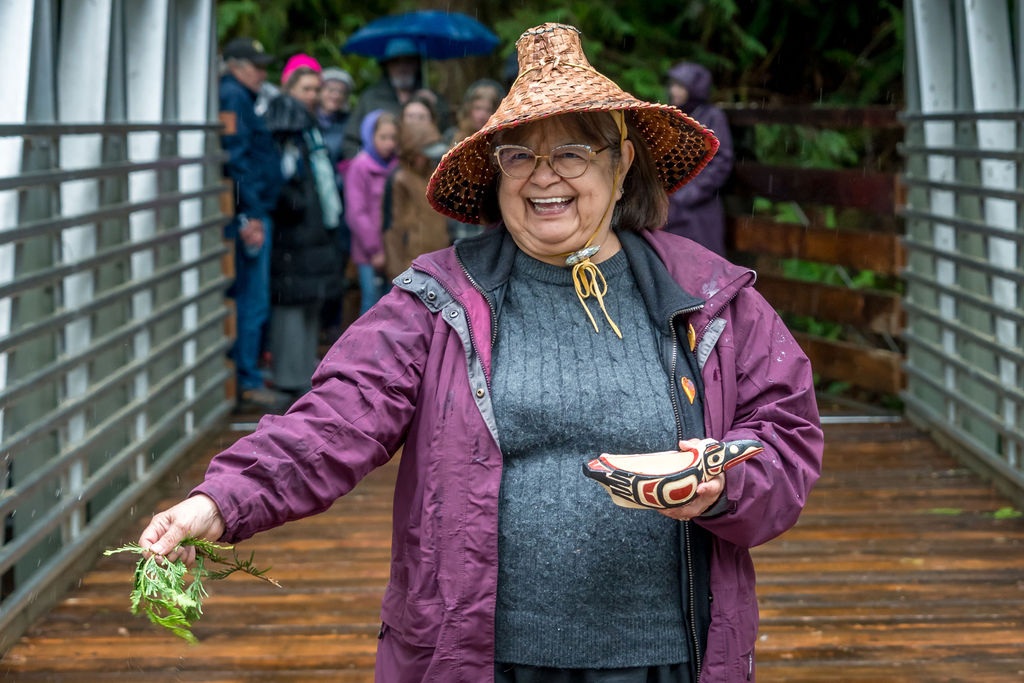

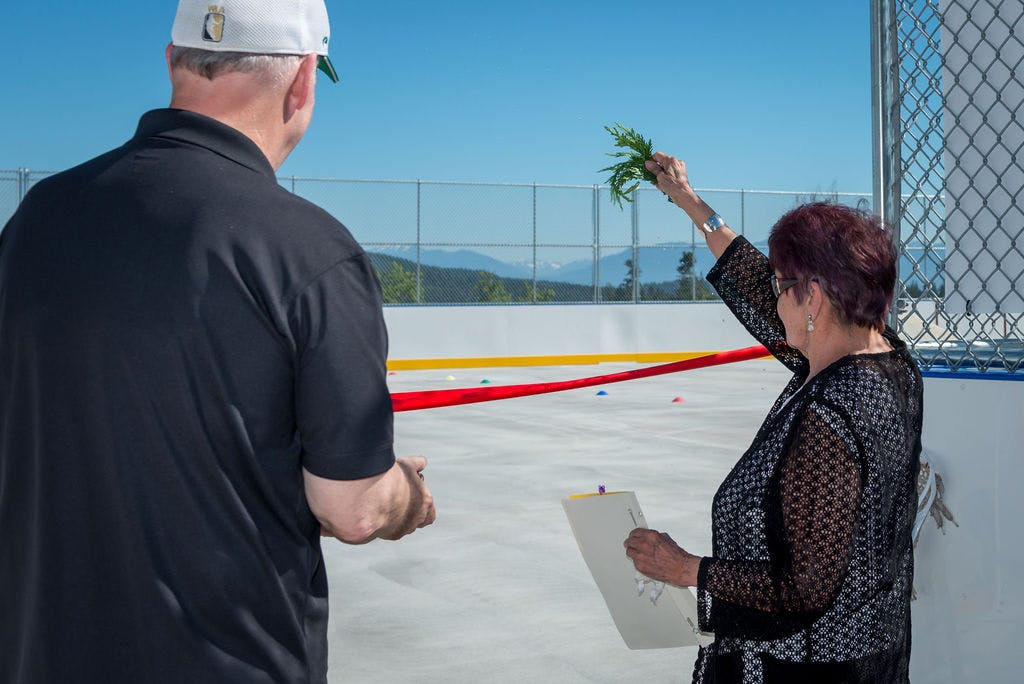
    Elder Jackie offers a blessing during the opening of the Little River Crossing on May 15, 2026.


    The opening of the Little River (DeMamiel Creek) Pedestrian Crossing and Multi-Use Trail marks an important step in implementing Sooke’s Climate Action Plan by making it easier for residents to choose active transportationfor short local trips.

    The new crossing links the Sunriver neighbourhood, local schools and Sooke’s town core through a 600-metre forested trail, creating a more direct alternative to the previous four-kilometre route along Highway 14. The project adds a new connection within Sooke’s active transportation network and supports walking, routes to school, recreation and access to nature.

    This kind of infrastructure directly supports the goals of Sooke's Climate Action Plan, which calls on the community to rethink how we move, enjoy more time closer to home, strengthen local connection and reduce greenhouse gas emissions. Sooke is working toward reducing greenhouse gas emissions by 50% by 2030 and 100% by 2050.

    By providing a safe, scenic and convenient route between neighbourhoods, schools and community amenities, the Little River Crossing helps make walking a more practical option for everyday movement. It also supports a more connected community by giving residents, students and families an alternative to travelling by vehicle for some local trips.

    The project reflects several climate action themes:

    • Active transportation - How We Move: The trail supports walking and everyday travel, helping residents make lower-carbon choices for short trips.
    • Complete, connected communities - How We Grow: By linking Sunriver, schools and the town core, the crossing brings key destinations closer together and supports more local movement.
    • Connection to nature - How We Relate: The forested trail, ravine and creek setting offer residents a way to move through the community while experiencing the natural environment that shapes Sooke’s identity.
    • Learning and stewardship - How We Relate: Interpretive signage and Coast Salish art are integrated along the route, reflecting the history and ongoing relationship to place. The project also creates opportunities for students and families to learn from the forest, river and surrounding environment.
    • Partnership and long-term planning - How We Lead: Originally identified through the District’s Parks and Trails Master Plan and supported by community advocates and advisory groups, the project demonstrates how long-term planning, partnership and investment can advance climate action in practical, community-focused ways.

    Together, these benefits show that climate action is not only about emissions targets. It is also about creating a community where people can safely and conveniently move between the places they live, learn, work and gather — while staying connected to the natural environment.

    Residents are invited to experience the Little River Crossing respectfully and thoughtfully, and to continue following Climate Action Plan implementation updates on this page.


    Elder Jackie offers a blessing during the opening of the Little River Crossing on May 15, 2026.


  • No Kid-ding: Goats Return to Sooke’s Earth Day Celebration on April 22

    Share No Kid-ding: Goats Return to Sooke’s Earth Day Celebration on April 22 on Facebook Share No Kid-ding: Goats Return to Sooke’s Earth Day Celebration on April 22 on Twitter Share No Kid-ding: Goats Return to Sooke’s Earth Day Celebration on April 22 on Linkedin Email No Kid-ding: Goats Return to Sooke’s Earth Day Celebration on April 22 link

    When goats made their debut at last year’s Earth Day event in Sooke, they quickly stole the show - charming visitors while demonstrating an eco-friendly approach to land stewardship and invasive species management. This year, they’re back by popular demand, and once again taking centre stage in a learning celebration that continues to grow in both scale and spirit.

    On Wednesday, April 22, from 10 a.m. to 2 p.m. at Woodland Creek Park, the District of Sooke will host its annual Earth Day event. The event is expected to welcome approximately 300 students, alongside educators, volunteers, and community

    When goats made their debut at last year’s Earth Day event in Sooke, they quickly stole the show - charming visitors while demonstrating an eco-friendly approach to land stewardship and invasive species management. This year, they’re back by popular demand, and once again taking centre stage in a learning celebration that continues to grow in both scale and spirit.

    On Wednesday, April 22, from 10 a.m. to 2 p.m. at Woodland Creek Park, the District of Sooke will host its annual Earth Day event. The event is expected to welcome approximately 300 students, alongside educators, volunteers, and community members.

    While the goats may be the crowd favourites, they’re just one part of the outdoor learning experience. The park will be transformed into a series of interactive expo spaces hosted by local organizations, each offering a unique window into environmental stewardship:

    From the Story Grove, where literacy and nature meet through a StoryWalk experience, to the Solar Station, where students can explore renewable energy in action, the event blends education with hands-on discovery. Visitors can also explore the Zero Waste Zone, focused on practical ways to reduce everyday waste, and a FireSmart and Emergency Management Station, where participants can learn practical steps to reduce wildfire risk and better prepare their households for emergencies.

    Mid-day, as school groups rotate through the stations, the event opens up to homeschool families and the broader community, offering a more flexible, drop-in opportunity to explore the exhibits and connect with local organizations.

    What makes the day truly special, however, is the collaboration behind it.

    “This event really shows what’s possible when a community comes together,” says Christina Moog, Manager of Communications and Community Relations. “We’ve had incredible support from our partners and 26 volunteers from a wide range of organizations who are helping bring these experiences to life. It’s fun, it’s hands-on, and it’s a chance for people to connect - with the environment and with each other.”

    Supported through the District’s Community Investment Program and powered by volunteers, the event highlights how local partnerships can create meaningful, place-based learning opportunities. It also aligns with the goals of Council Club, which encourages civic awareness and engagement among young residents.

    From curious students to returning goat fans, this year’s Earth Day celebration promises to be lively, educational, and unmistakably Sooke.


    Thank You to Our Event Partners

    This event is made possible through the collaboration and support of local organizations dedicated to environmental stewardship and community learning. We’re grateful for the time, expertise, and enthusiasm each partner brings to this shared Earth Day experience.

    Event Partners (alphabetical):

    • 606 Water Group
    • Friends of Sooke Parks Society
    • Shift Energy Group
    • Sooke Garden Club
    • Transition Sooke – Zero Waste Sooke
    • Vancouver Island Regional Library

    Funding Partners:

    • BC Government – Local Government Climate Action Program
    • UBCM FireSmart Program
  • Join the Effort to Care for Whiffin Spit Park This Spring

    Share Join the Effort to Care for Whiffin Spit Park This Spring on Facebook Share Join the Effort to Care for Whiffin Spit Park This Spring on Twitter Share Join the Effort to Care for Whiffin Spit Park This Spring on Linkedin Email Join the Effort to Care for Whiffin Spit Park This Spring link

    Each spring at Whiffin Spit Park, something remarkable happens.

    Armed with broom pullers, gloves, and plenty of determination, volunteers gather to care for one of Sooke’s most cherished natural spaces. For 18 years, the Juan de Fuca Community Trails Society has led this quiet but powerful stewardship effort. They are now joined by the Friends of Sooke Parks Society, working together to remove invasive Scotch broom and help native plants thrive.

    From March 1 to April 15, small “work parties” will once again head out to the Spit, typically once or twice a week from 9 to 11:30 a.m., weather

    Each spring at Whiffin Spit Park, something remarkable happens.

    Armed with broom pullers, gloves, and plenty of determination, volunteers gather to care for one of Sooke’s most cherished natural spaces. For 18 years, the Juan de Fuca Community Trails Society has led this quiet but powerful stewardship effort. They are now joined by the Friends of Sooke Parks Society, working together to remove invasive Scotch broom and help native plants thrive.

    From March 1 to April 15, small “work parties” will once again head out to the Spit, typically once or twice a week from 9 to 11:30 a.m., weather permitting. The invitation is simple: if you care about this place and are available, lend a hand.

    Beyond the important ecological benefits, these sessions offer something equally valuable - a chance to enjoy fresh ocean air, good company, and one of the most picturesque landscapes in our region. There is a quiet satisfaction in working alongside neighbours while overlooking the Strait, knowing your efforts are helping care for this special place.

    When this work began nearly two decades ago, Scotch broom was steadily engulfing the Spit. Volunteers were looking for a meaningful community project - something visible, impactful, and aligned with their mission to advocate for parks and trails in the region. Whiffin Spit, a well-loved walking destination with clearly defined borders, felt like the right place to begin.

    Before pulling a single plant, organizers sought permission from the District of Sooke and walked the Spit with a CRD botanist. The conclusion was clear: the broom infestation was so established that removing it would not harm the remaining native vegetation. In fact, removal was essential to give native species room to breathe.

    What volunteers may not have realized at the time was the scale of the commitment they were making. Scotch broom seeds can remain viable in the soil for more than 40 years. Without ongoing care, the plant would quickly reclaim the landscape.

    And so, year after year, they returned.

    Over time, the rewards of that persistence have become visible. Wild roses have rebounded. Nodding onion is spreading. A small patch of maritime thrift is growing. Red flowering currant, June plum, and coastal black gooseberry - with its delicate fuchsia look-alike blossoms - are increasing.

    The changes are subtle but meaningful - made possible by community members coming together with a shared purpose.

    To ensure efforts are coordinated and effective, we kindly ask that broom removal be carried out during scheduled work parties. This allows new volunteers to receive proper site orientation and helps ensure stewardship activities are undertaken thoughtfully and as intended.

    If you have ever walked Whiffin Spit and felt grateful for its beauty, consider joining a work party this spring. Equipment is provided. No special expertise is required - just a willingness to help.

    Volunteer Stewardship Days will be posted at the park or email Juan de Fuca Community Trails for more information at jdf.cts@gmail.com. To receive notifications about events in Sooke, subscribe to the District’s weekly event digest at sooke.ca/events.

  • District of Sooke Celebrates New Public Art Installation at Ravens Ridge Park

    Share District of Sooke Celebrates New Public Art Installation at Ravens Ridge Park on Facebook Share District of Sooke Celebrates New Public Art Installation at Ravens Ridge Park on Twitter Share District of Sooke Celebrates New Public Art Installation at Ravens Ridge Park on Linkedin Email District of Sooke Celebrates New Public Art Installation at Ravens Ridge Park link

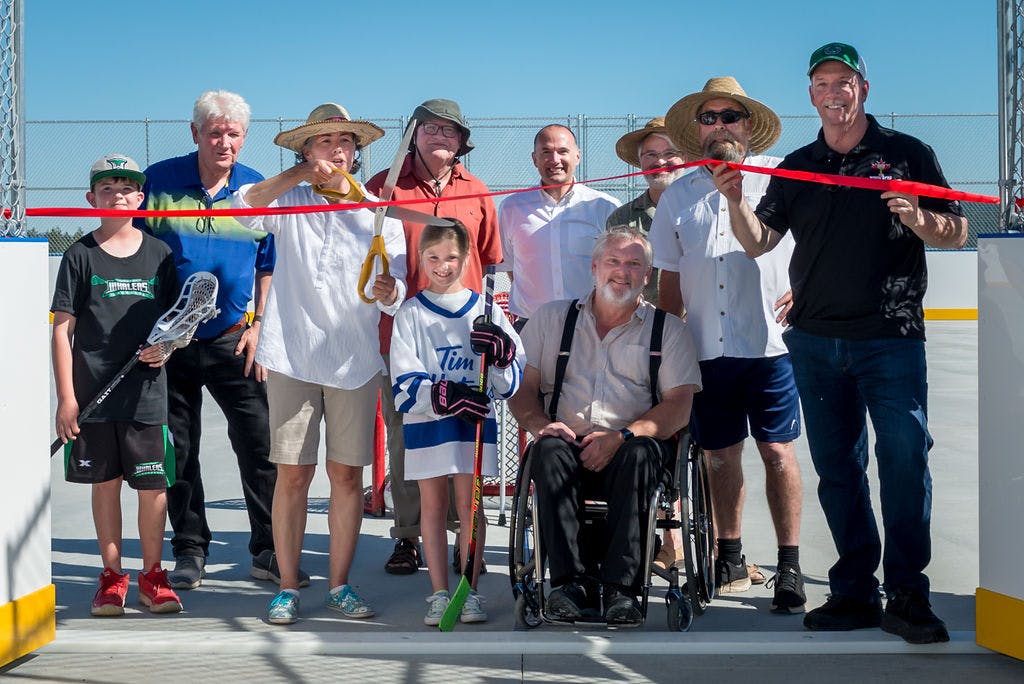
    The District of Sooke is pleased to announce the installation of a new public artwork at Ravens Ridge Park, reinforcing the community’s commitment to meaningful public art that reflects local landscape, culture, and collaboration. The park’s name was selected with support from the T’Sou-ke Nation to honour the origins of the land and the raven, a bird deeply rooted in local presence and symbolism.
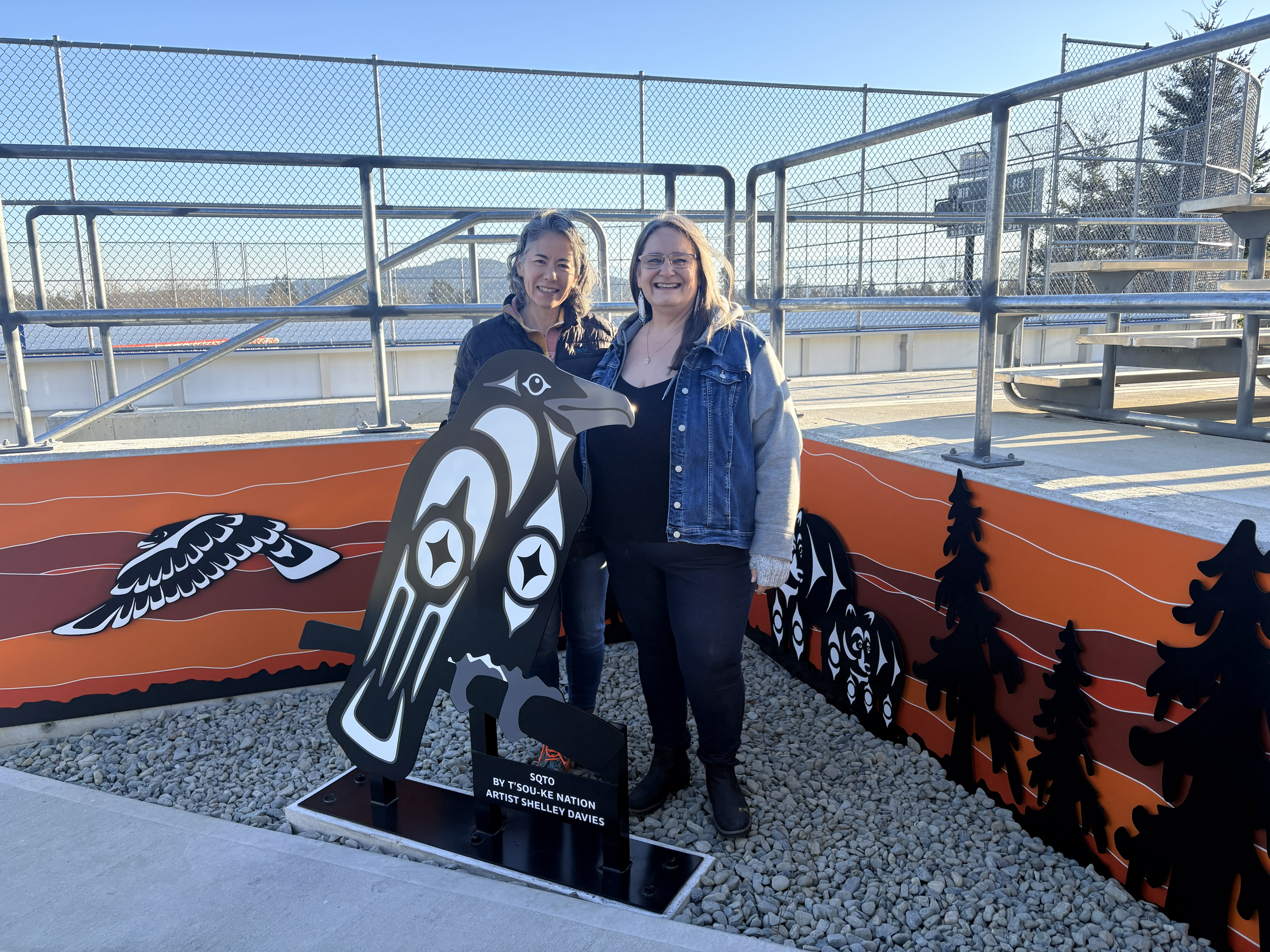
    The artwork, SQTO (Raven in Senćoŧen), by artist Shelley Davies, draws inspiration from the park’s name and setting. It features a grounded raven and a second raven in flight, symbolizing movement, perspective, and connection. A mother

    The District of Sooke is pleased to announce the installation of a new public artwork at Ravens Ridge Park, reinforcing the community’s commitment to meaningful public art that reflects local landscape, culture, and collaboration. The park’s name was selected with support from the T’Sou-ke Nation to honour the origins of the land and the raven, a bird deeply rooted in local presence and symbolism.

    The artwork, SQTO (Raven in Senćoŧen), by artist Shelley Davies, draws inspiration from the park’s name and setting. It features a grounded raven and a second raven in flight, symbolizing movement, perspective, and connection. A mother bear and cub reflect care, protection, and family gathering, while silhouetted trees, stikas, and a bold sunset evoke the west coast landscape.

    “The raven is a symbol of transformation, intelligence, and guidance,” said Davies. “By including two ravens and the mother and cub, I wanted to reflect both movement and togetherness—how this space supports play, gathering, and connection.”

    Mayor Maja Tait highlighted the importance of public art in community spaces. “SQTO reflects who we are and how we come together,” she said. “It recognizes Ravens Ridge Park as a place for families, recreation, and connection, and celebrates the collaboration behind its creation.”

    Public art in Sooke is supported through the Sooke Public Art Reserve Fund, funded by three per cent of annual building permit user fees, ensuring ongoing investment in cultural projects that enhance public spaces.

    Located at 2430 Phillips Road, Ravens Ridge Park is a multi-use destination featuring a sports box, games area, washrooms, water fountain, bike racks, neighbourhood-access trails, and parking. The park was developed through grant funding and District contributions in partnership with SEAPARC.

    Residents and visitors are invited to visit Ravens Ridge Park to experience SQTO and enjoy the park’s recreational and gathering spaces.

  • Little River (Demamiel Creek) Crossing Reaches Substantial Completion

    Share Little River (Demamiel Creek) Crossing Reaches Substantial Completion on Facebook Share Little River (Demamiel Creek) Crossing Reaches Substantial Completion on Twitter Share Little River (Demamiel Creek) Crossing Reaches Substantial Completion on Linkedin Email Little River (Demamiel Creek) Crossing Reaches Substantial Completion link

    Opening celebration planned for spring following final enhancements

    The District of Sooke is pleased to announce that the Little River (Demamiel Creek) Crossing has reached substantial completion, marking an important milestone in expanding pedestrian connections and nature-based recreation opportunities in the community.
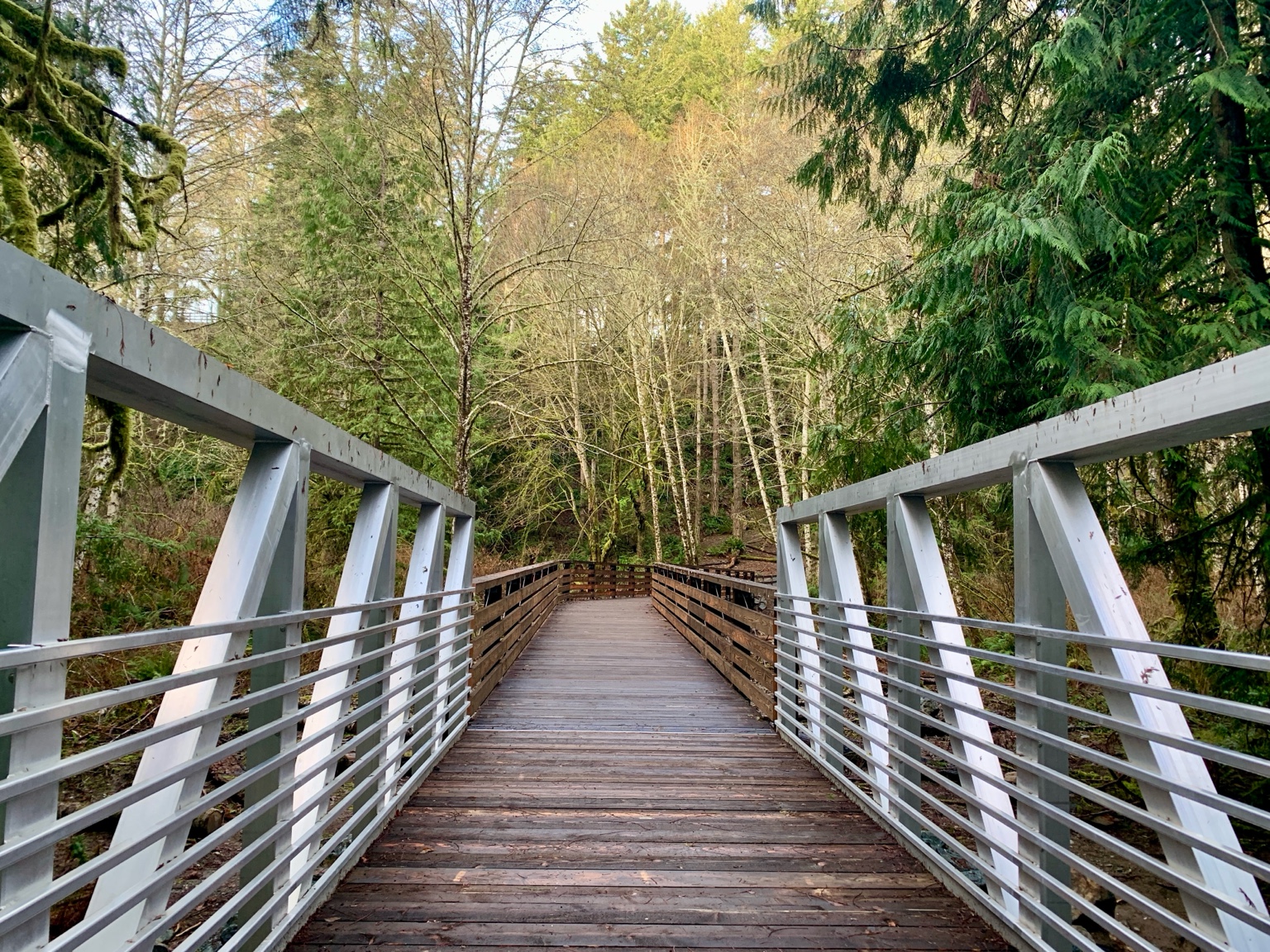
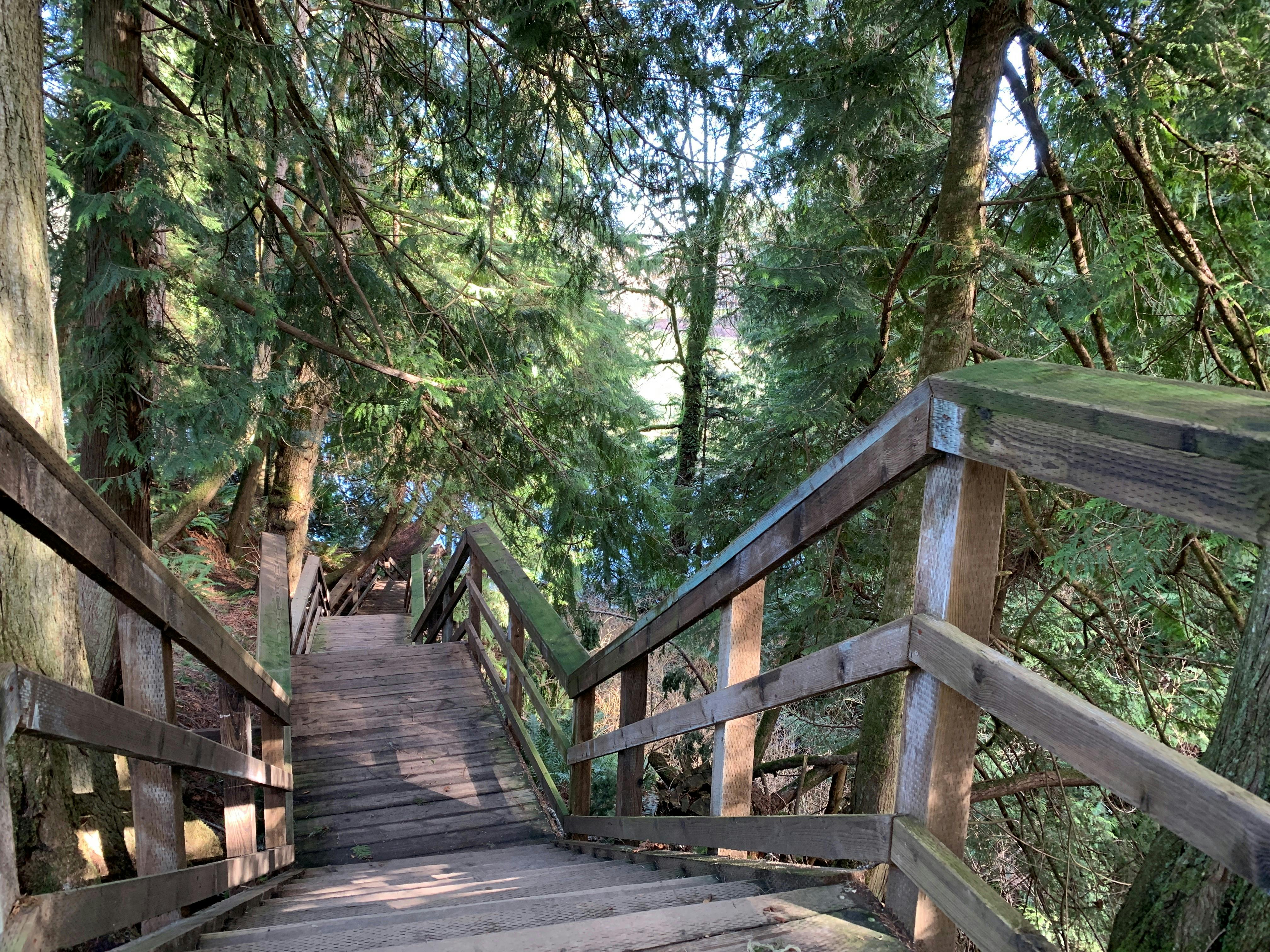
    Nestled within a forested ravine, the Little River Crossing features a steel and timber pedestrian bridge, elevated boardwalk sections, and a gravel nature trail that winds through mature trees, ferns, and moss-covered landscapes while crossing Little River below. The project has been designed to blend into its natural surroundings while providing a welcoming route for people to experience

    Opening celebration planned for spring following final enhancements

    The District of Sooke is pleased to announce that the Little River (Demamiel Creek) Crossing has reached substantial completion, marking an important milestone in expanding pedestrian connections and nature-based recreation opportunities in the community.

    Nestled within a forested ravine, the Little River Crossing features a steel and timber pedestrian bridge, elevated boardwalk sections, and a gravel nature trail that winds through mature trees, ferns, and moss-covered landscapes while crossing Little River below. The project has been designed to blend into its natural surroundings while providing a welcoming route for people to experience the area’s ecological richness.

    Final finishing touches are currently underway, including the installation of wayfinding and interpretive signage, benches, and pedestrian-activated flashers at the Sunriver Way crosswalk near the east trailhead. Once this additional work is complete, the District will host an opening celebration in spring to officially welcome the community to the new crossing.

    The Little River Crossing provides a new pedestrian connection between Sooke’s town core and the Sunriver neighbourhood, including Ravens Ridge Park. The crossing can be accessed near the 2400 block of Sunriver Way on the east and from Poirier Elementary School on the west, and connects to the Ponds Park Corridor, strengthening surrounding trail networks.

    “Little River Crossing is a special project that allows people to move through the landscape rather than around it,” said Emma Taylor, Parks, Facilities and Environmental Services Manager. “From the elevated boardwalks to the bridge overlooking the river, the trail offers a unique opportunity to experience this forested area while improving connections between neighbourhoods.”

    The project was made possible through a combination of external funding and local investment, including $1.3 million in federal active transportation funding, $500,000 in provincial active transportation funding, and Development Cost Charges.

    “This project reflects Sooke’s commitment to creating thoughtful, people-centered infrastructure that respects our natural environment,” said Mayor Maja Tait. “Little River Crossing connects communities, encourages outdoor recreation, and creates a meaningful place for residents to slow down and enjoy the natural beauty that makes Sooke special.”

    Details about the opening celebration will be shared once final work is complete.

    For more information about the Little River Crossing project, visit sooke.ca/littleriver

  • Parks and Trails Master Plan Mid-Point Review Received by Council

    Share Parks and Trails Master Plan Mid-Point Review Received by Council on Facebook Share Parks and Trails Master Plan Mid-Point Review Received by Council on Twitter Share Parks and Trails Master Plan Mid-Point Review Received by Council on Linkedin Email Parks and Trails Master Plan Mid-Point Review Received by Council link

    At the November 24, 2025 Regular Council Meeting, Council received the Parks and Trails Master Plan (PTMP) Mid-Point Review for information.

    Adopted in 2020, the PTMP guides the planning, acquisition, development, and operation of parks and trails across Sooke. Developed alongside the Transportation Master Plan, it reflects extensive community input and helps shape departmental priorities over a 10-year horizon.

    The PTMP vision — “Our parks and trails protect our environment, connect our activities, and support our recreation from the rainforest to the sea” — continues to guide decision-making. Its goals focus on quality and inclusivity, connectivity, future parkland, waterfront access

    At the November 24, 2025 Regular Council Meeting, Council received the Parks and Trails Master Plan (PTMP) Mid-Point Review for information.

    Adopted in 2020, the PTMP guides the planning, acquisition, development, and operation of parks and trails across Sooke. Developed alongside the Transportation Master Plan, it reflects extensive community input and helps shape departmental priorities over a 10-year horizon.

    The PTMP vision — “Our parks and trails protect our environment, connect our activities, and support our recreation from the rainforest to the sea” — continues to guide decision-making. Its goals focus on quality and inclusivity, connectivity, future parkland, waterfront access, environmental stewardship, and efficiency.

    Progress to Date
    Steady progress has been made across all focus areas, including trails, parkland, amenities, waterfront access, and the environment. Highlights include:

    • Completion of Carter Navarrete Park (off-leash dog area) and Ravens Ridge Park improvements
    • New waterfront access improvements at Cains Family Park and Bluff Park
    • Advancement of key trail connections, including Little River, Sunriver, and Patterson Place routes
    • Trailhead upgrades at West Trail Court, Clarkson Place, and Sooke River Park
    • Adoption of the Naming of Municipal Assets and Infrastructure Policy (2022)

    Ongoing work also includes environmental protection initiatives, partnerships with T’Sou-ke Nation on public art and signage, and continued support for food security through the Sunriver Community Garden and Orchard.

    What’s Underway
    Current and upcoming work includes:

    • Development of a parkland acquisition policy
    • Initiation of a signage strategy
    • Continued planning for trail connectivity and waterfront access
    • Integration of environmental protection measures through policy and planning

    Some housekeeping updates to the plan are also being proposed to reflect current roles and responsibilities.

    Looking Ahead
    Remaining actions will guide parks and trails planning over the next five years. A full update to the PTMP will be considered near the end of its lifecycle to refresh priorities and respond to evolving community needs.

    This mid-point review highlights the meaningful progress made to date and reinforces the PTMP as a key tool in protecting Sooke’s natural environment, improving connectivity, and supporting recreation for the community.

  • T’Sou-ke Nation Collaboration and BC Hydro Regreening Grant Provide Park Restoration and Ecosystem Enhancements

    Share T’Sou-ke Nation Collaboration and BC Hydro Regreening Grant Provide Park Restoration and Ecosystem Enhancements on Facebook Share T’Sou-ke Nation Collaboration and BC Hydro Regreening Grant Provide Park Restoration and Ecosystem Enhancements on Twitter Share T’Sou-ke Nation Collaboration and BC Hydro Regreening Grant Provide Park Restoration and Ecosystem Enhancements on Linkedin Email T’Sou-ke Nation Collaboration and BC Hydro Regreening Grant Provide Park Restoration and Ecosystem Enhancements link

    In collaboration with the T’Sou-ke Nation and with a $7,210 BC Hydro Regreening Grant, the District is restoring local ecosystems, improving water quality, and enhancing green spaces at John Phillips Memorial Park, Broomhill Playground and Helgeson Park for all residents to enjoy.
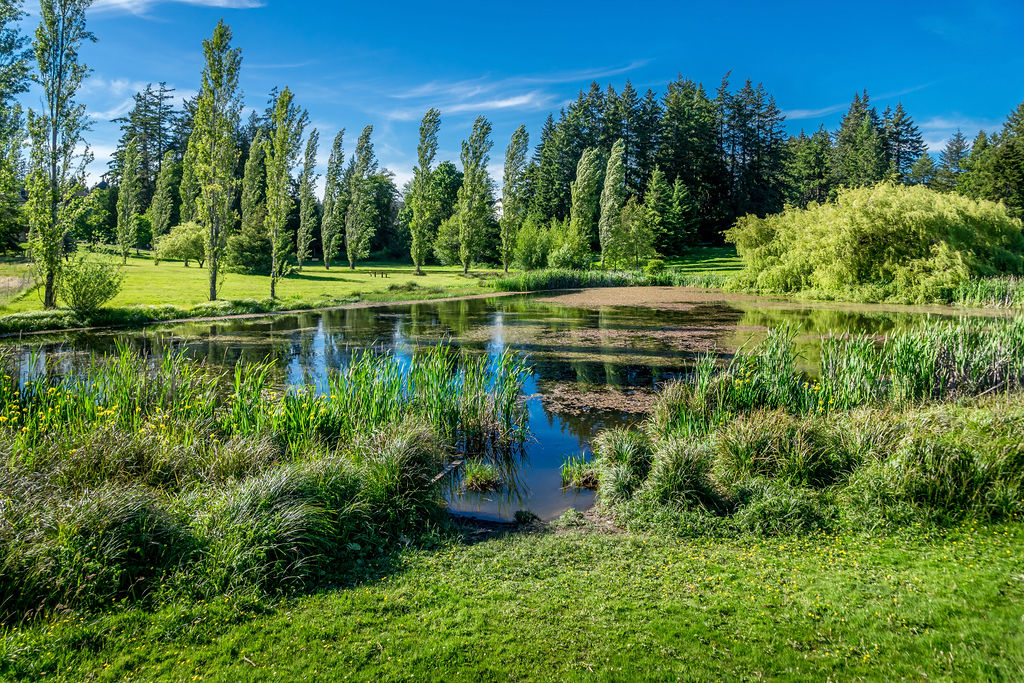
    Native vegetation and riparian planting at Nott Pond in John Phillips Memorial Park are helping to restore habitat, improve water quality, and support biodiversity thanks to a collaborative project between the District of Sooke, the T’Sou-ke Nation, and funding from BC Hydro’s Regreening Program.

    "We are pleased to work together in caring for these sensitive areas and protecting the streams that flow through places like Nott Pond and Helgesen Creek. This project demonstrates our shared commitment and responsibility to steward the territory for generations to come," says T’Sou-ke Nation Chief Larry Underwood.

    “This project reflects our ongoing commitment to environmental stewardship and thoughtful park management,” shares Emma Taylor, Facilities, Parks and Environmental Services Manager. “By planting native species and restoring riparian zones, we are supporting biodiversity, protecting water quality, and creating healthier parks for our community. We’re grateful to BC Hydro for funding and our T’Sou-ke Nation partners in supporting this important work.”

    Project Scope

    John Phillips Memorial Park
    Native trees and shrubs will be planted around Nott Pond and its tributaries to restore important habitat, improve water quality, and reduce the spread of invasive reed canary grass.

    Broomhill Playground Park
    Located at the headwaters of Helgesen Stream, this area will see continued restoration of sensitive riparian habitat. A split rail fence will be extended to protect vegetation, and native species like sedges and ferns will be planted to help stabilize the streambanks.

    Helgesen Park
    This small neighbourhood park and trail connector currently lacks tree cover. Three large deciduous trees will be planted to provide shade, add beauty, and support climate resilience.

    Tree and shrub planting in all three parks is scheduled for Fall 2025. District staff will mulch and water the new plantings for the first three growing seasons to ensure healthy establishment.

    The District thanks BC Hydro for their investment in Sooke’s natural spaces through the Regreening Program. To learn more about the program, visit:

    In collaboration with the T’Sou-ke Nation and with a $7,210 BC Hydro Regreening Grant, the District is restoring local ecosystems, improving water quality, and enhancing green spaces at John Phillips Memorial Park, Broomhill Playground and Helgeson Park for all residents to enjoy.

    Native vegetation and riparian planting at Nott Pond in John Phillips Memorial Park are helping to restore habitat, improve water quality, and support biodiversity thanks to a collaborative project between the District of Sooke, the T’Sou-ke Nation, and funding from BC Hydro’s Regreening Program.

    "We are pleased to work together in caring for these sensitive areas and protecting the streams that flow through places like Nott Pond and Helgesen Creek. This project demonstrates our shared commitment and responsibility to steward the territory for generations to come," says T’Sou-ke Nation Chief Larry Underwood.

    “This project reflects our ongoing commitment to environmental stewardship and thoughtful park management,” shares Emma Taylor, Facilities, Parks and Environmental Services Manager. “By planting native species and restoring riparian zones, we are supporting biodiversity, protecting water quality, and creating healthier parks for our community. We’re grateful to BC Hydro for funding and our T’Sou-ke Nation partners in supporting this important work.”

    Project Scope

    John Phillips Memorial Park
    Native trees and shrubs will be planted around Nott Pond and its tributaries to restore important habitat, improve water quality, and reduce the spread of invasive reed canary grass.

    Broomhill Playground Park
    Located at the headwaters of Helgesen Stream, this area will see continued restoration of sensitive riparian habitat. A split rail fence will be extended to protect vegetation, and native species like sedges and ferns will be planted to help stabilize the streambanks.

    Helgesen Park
    This small neighbourhood park and trail connector currently lacks tree cover. Three large deciduous trees will be planted to provide shade, add beauty, and support climate resilience.

    Tree and shrub planting in all three parks is scheduled for Fall 2025. District staff will mulch and water the new plantings for the first three growing seasons to ensure healthy establishment.

    The District thanks BC Hydro for their investment in Sooke’s natural spaces through the Regreening Program. To learn more about the program, visit:

  • Groundbreaking Ceremony Celebrates Little River Pedestrian Crossing Project

    Share Groundbreaking Ceremony Celebrates Little River Pedestrian Crossing Project on Facebook Share Groundbreaking Ceremony Celebrates Little River Pedestrian Crossing Project on Twitter Share Groundbreaking Ceremony Celebrates Little River Pedestrian Crossing Project on Linkedin Email Groundbreaking Ceremony Celebrates Little River Pedestrian Crossing Project link

    Today, the District of Sooke celebrated a significant milestone in the development of the Little River Pedestrian Crossing and Multi-Use Trails Project with a groundbreaking ceremony. The event brought together community leaders, representatives from T’Sou-ke Nation, and local school children to mark the start of this transformational $2.7 million investment.

    Community comes together for groundbreaking of Little River Pedestrian Crossing and Multi Use Trail Project

    The ceremony featured T’Sou-ke Elder Jackie Planes-Deyaeger, who provided a blessing, and included T’Sou-ke Nation Chief Larry Underwood, MLA Dana Lajeunesse, Sooke School District 62 Board Trustees Cendra Beaton (Chair) and Ebony Logins, Secretary-Treasurer Brian

    Today, the District of Sooke celebrated a significant milestone in the development of the Little River Pedestrian Crossing and Multi-Use Trails Project with a groundbreaking ceremony. The event brought together community leaders, representatives from T’Sou-ke Nation, and local school children to mark the start of this transformational $2.7 million investment.

    Community comes together for groundbreaking of Little River Pedestrian Crossing and Multi Use Trail Project

    The ceremony featured T’Sou-ke Elder Jackie Planes-Deyaeger, who provided a blessing, and included T’Sou-ke Nation Chief Larry Underwood, MLA Dana Lajeunesse, Sooke School District 62 Board Trustees Cendra Beaton (Chair) and Ebony Logins, Secretary-Treasurer Brian Jonker, Journey Middle School Principal Darren Russell, Poirier Elementary School Principal Tess Vally, Poirier PAC President Jen Temple and Poirier Walking School Bus Leader Gen Evelyn, alongside District of Sooke Mayor and Council members, and enthusiastic students from Poirier Elementary School, all highlighting the collaborative effort behind this initiative.

    Mayor Tait led the ceremony thanking the numerous partners including the members of the former Parks and Trails Committee and members of the Juan de Fuca Community Trails Society who initiated project consideration, and Chief Larry Underwood, David Planes and Billy Mobley who provided cultural and environmental guidance leading to today’s milestone.

    She also expressed her gratitude to both the Federal and Provincial governments for their respective $1.3 million and $500,000 investments, acknowledging that remaining project funding is coming from developer contributions and Casino Reserve Funds. “Progressing a project of this scale for a community of our size with such a minimal impact on the immediate tax base, really limited to staff support, is an accomplishment in itself,” said Mayor Maja Tait. “It is an honour to share in today’s celebration with such a remarkable team who are our partners and true builders of community.”

    “Little River Crossing symbolizes the connection of people, place, and culture,” said T’Sou-ke Nation Chief Larry Underwood. “It reminds us of the importance of working together to create a vibrant, connected community while honouring the rich cultural history of the area through interpretive signage.”

    Once completed, the crossing will provide a safe and accessible pedestrian link between the Sunriver Neighbourhood, Poirier Elementary and Journey Middle Schools, and Sooke’s town core. It will provide a 600-metre pedestrian friendly route, offering a significant alternative to the current four-kilometre vehicle route on Highway 14 to travel the same corridor today.

    Sooke School District Board Chair, Cendra Beaton, shared her enthusiasm: “This project is so much more than a bridge—it’s a pathway to learning, community, and environmental stewardship. We’re excited for the opportunities this will create for our students and families.”

    Jen Temple, Poirier Parent Advisory Committee President, emphasized the importance of the crossing for families adding, “This project will transform how many students and parents travel to school. It offers a safer, greener way to connect with our community.”

    In an earlier statement, the Honourable Sean Fraser, Minister of Housing, Infrastructure and Communities soke about the project, “Canada is known for its natural beauty and rich cultural history. We’re proud to support projects that honour that while better connecting our communities. Improving the trail network surrounding (Little River) will help Sooke residents and visitors alike get around safely and enjoy all that the area has to offer. We will continue to invest in active transportation infrastructure improvements across the country that make life better for Canadians.”

    MLA Dana Lajeunesse echoed these sentiments, “The Little River Pedestrian Crossing is a perfect example of how provincial partnerships can create meaningful change for local communities. I look forward to seeing how this project inspires residents to choose active transportation options.”

    Construction on the project is beginning immediately, with substantial completion anticipated this fall. Project updates will be provided to the community through the District’s website.

    “The Little River Pedestrian Crossing represents a brighter future for Sooke. By investing in active transportation infrastructure, we’re connecting neighbourhoods, creating safe routes for families, and fostering a healthier, more sustainable community,” said Tait.

    For more information, please visit the project web page:

    Additional Resources:

Page last updated: 27 May 2026, 09:57 AM